
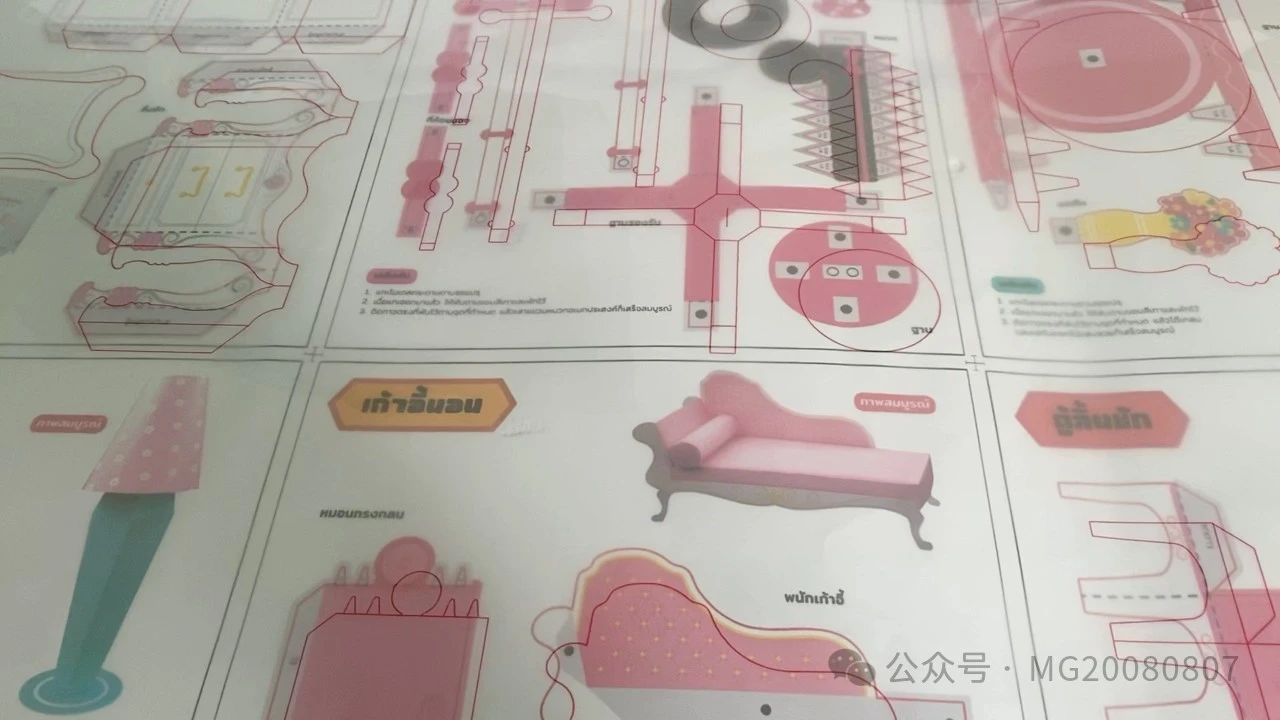
In the laser die-making process for printed packaging or products, it is usually required to use actual printed finished products for positioning and die cutting, for the main reasons as follows:
- Error margin in the printing processAffected by material scalability, ink diffusion, machine precision and other factors in the printing process, the finished product size may have minor deviations from the design drawing (usually within ±0.5mm). If the die is made directly according to the design drawing, misalignment between the laser die and the printed pattern may occur, impairing the appearance or functionality of the finished product.
- High register accuracy requirementsPackaging products (such as color boxes and labels) often require strict alignment between die-cut lines and the edges of printed patterns (e.g., bleed lines and crease lines). Physical product positioning can visually verify the actual matching degree between die lines and patterns, avoiding mass rejection caused by inconsistencies between theoretical data and real objects.
- Unpredictable material deformationPrinting substrates such as paper and plastic may shrink or expand during printing and drying, especially materials sensitive to humidity and temperature. Physical positioning can directly compensate for such deformation and ensure the laser die adapts to the actual physical state of materials.
- Adaptation requirements for special processesPost-processing techniques such as hot stamping and partial UV coating may change material thickness or surface tension, thereby affecting the cutting effect. Physical positioning allows adjustment of die pressure parameters to prevent over-cutting or insufficient scoring marks.
- Balance of cost and efficiencyAlthough the positioning process increases working hours, it can greatly reduce rework costs compared with the risk of dimensional inconsistency after mass production. Especially for high-value-added products (such as luxury packaging) with extremely high precision requirements, physical verification is an indispensable procedure.
Positioning with actual printed products in laser die making is an essential step to compensate for errors arising from multiple links including design, printing and material properties.